What’s there to visit?
If you find yourself in Bologna, the most artistic and creative city per excellence, and you don’t know where to start discovering it, well…I will tell you what to do and where to go! I will give you the most important guidance for your trip, to the most important architecture and historic buildings that you cannot miss. You will live extraordinary memories you will remember!
Piazza Maggiore
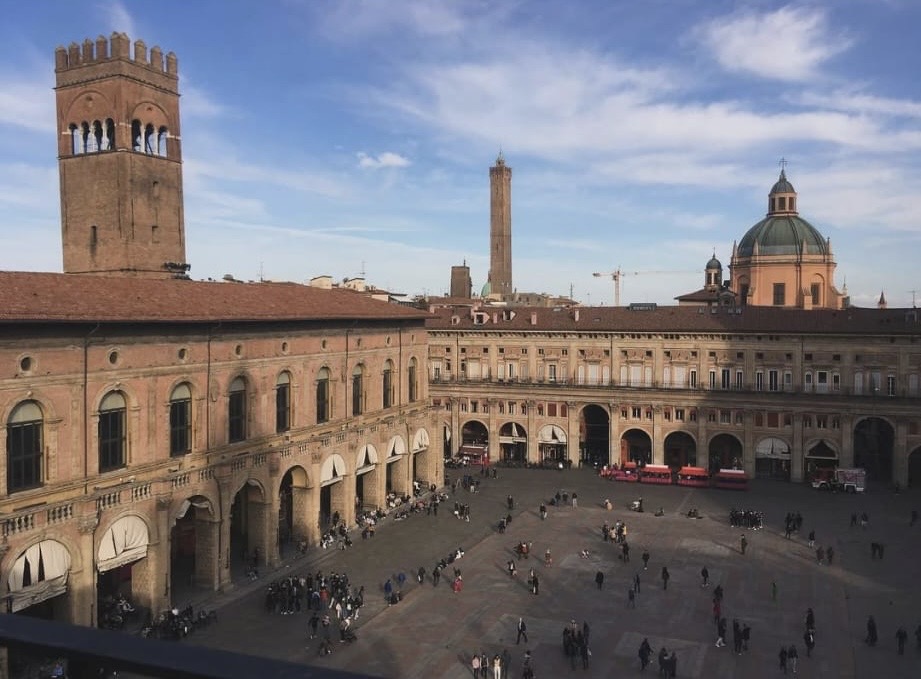
Let’s start with the most famous piazza, Piazza Maggiore, known also as Piazza Grande, (as Lucio Dalla sang in his famous song) which is the beating heart of the city. It is the center of Bologna’s civil and religious life. Piazza Maggiore is surrounded by porticoes, medieval Renaissance buildings and structures such as Palazzo d’Accursio. The Piazza is also famous for the Fountain of Neptune, which overlooks the most important buildings of the medieval city, such as the Town Hall with its clock tower and the Stock Exchange Hall. We can also see the Basilica of San Petronio, opposite which stands the elegant Palazzo del Podestà. All buildings are essential witnesses of the history of the city, a history that began in the early 1200s.

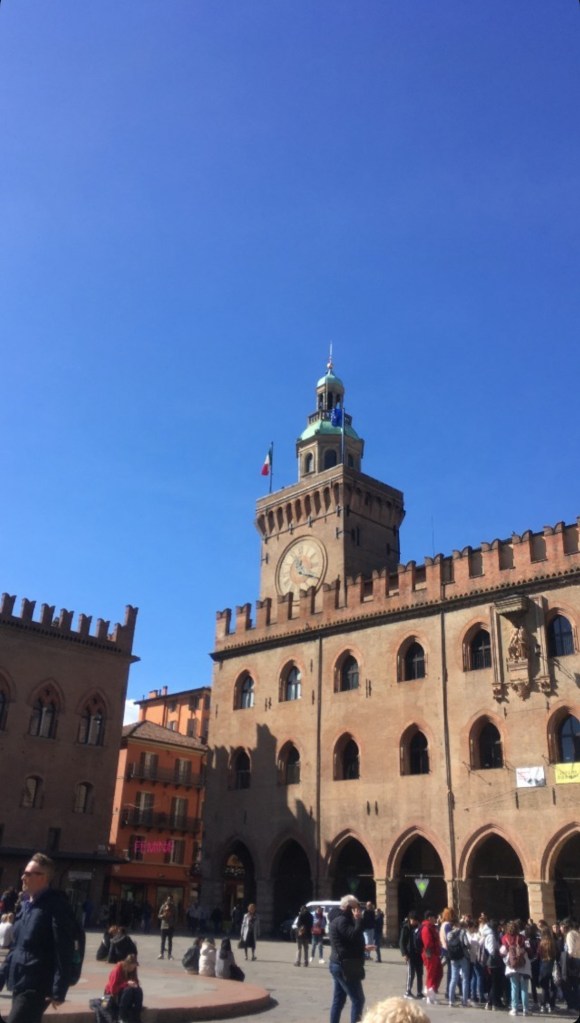
La Torre dell’Orologio
The Clock Tower is called in this way because of a big clock collocated on top of the tower, that you can glimpse from the Piazza. The Clock Tower is also identified as Palazzo D’Accursio, the place of the Municipality of Bologna. Since 1336, Bologna’s political power has been exercised in the frescoed halls of this beautiful palace. It takes its name from the jurist Accursio, who lived there once. Some of the rooms of the Palazzo D’Accursio are Sala d’Ercole, Sala del Consiglio Comunale, Sala Farnese, Cappella Farnese, Sala Rossa e Sala Urbana that you can visit, some of them have deeply elegant and fancy Art Collections. The Torre Accursio, or Clock Tower, is open to the public: you can climb to the top, discover the mechanism that regulates the clock, (which is very fascinating) and from there, if you go out on the terrace you are able to see Bologna. The panorama is stunning!
Basilica di San Petronio
The Basilica di San Petronio is the most important and imposing church in Bologna, as well as the fifth largest church in the world. The construction of the Basilica began in 1390, it is the last great Gothic building constructed in Italy.

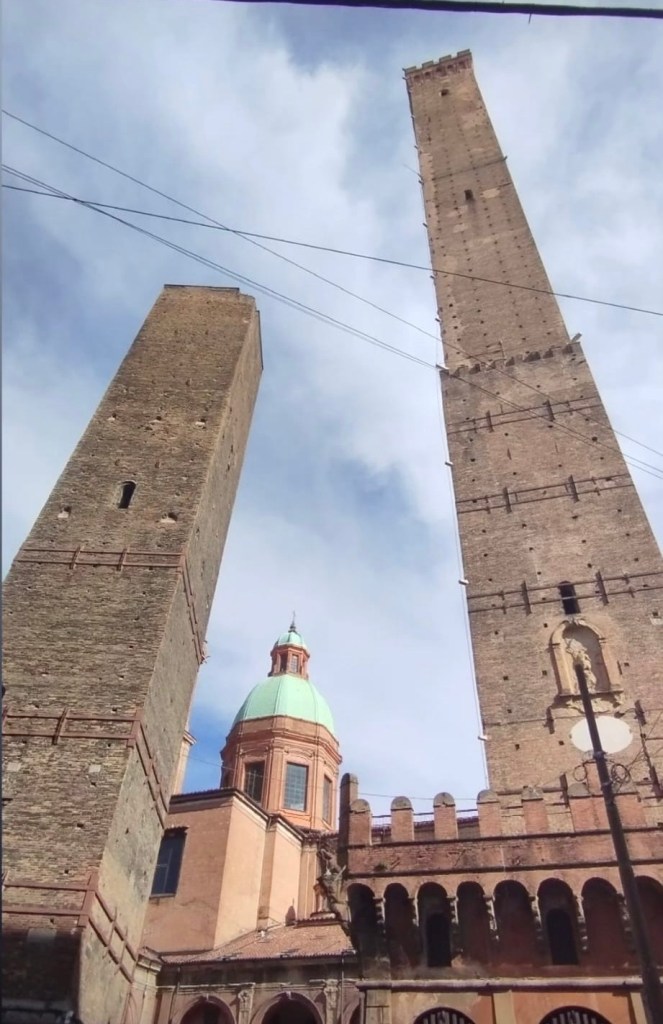
La Torre degli Asinelli
The two most important towers are called: Torre degli Asinelli and La Garisenda. La Torre degli Asinelli was built between 1109 and 1119 by the Asinelli family, who, in addition to gaining social prestige, used it for military defense and observation purposes. In 1448, the tower was equipped with a citadel to house the soldiers on guard. The arches of the citadel’s portico currently house several artisan workshops, a reminder of the city’s commercial role in the Middle Ages.Visitors, after climbing the 498 steps of the internal staircase (we weren’t able to climb because it was closed for renovation) can reach the top of the Asinelli Tower which, from its 97.20 meters of height, allows them to have an incredible view of the red city.
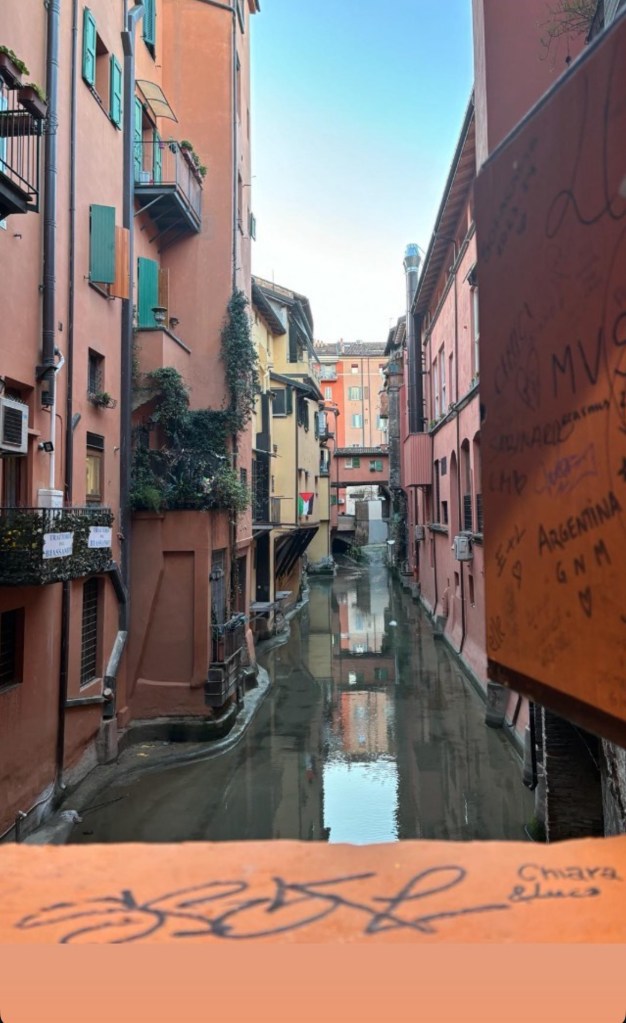
I canali di Bologna
You might not think so, but Bologna has always been a “city of water,” a little Venice that is now largely hidden. If you visit Bologna you can’t miss the most evocative glimpse. If someone doesn’t tell you, you won’t see it. It’s completely hidden by a small window. What makes it even special is that excitement of what you will find behind that window… the expectation of something wonderful! You find it inVia Piella and you surely will remain speechless. The view opens onto the Moline Canal, used for centuries to power the watermills that processed grain. It depends from the time of the year you visit, you can find more water or less water, but the landscape that surrounds that canal is very characteristic: that little narrow canal surrounded by houses, windows and terraces with water beneath: it makes the view stunning and is the most unique sight in Bologna.
Basilica delle Sette Chiese
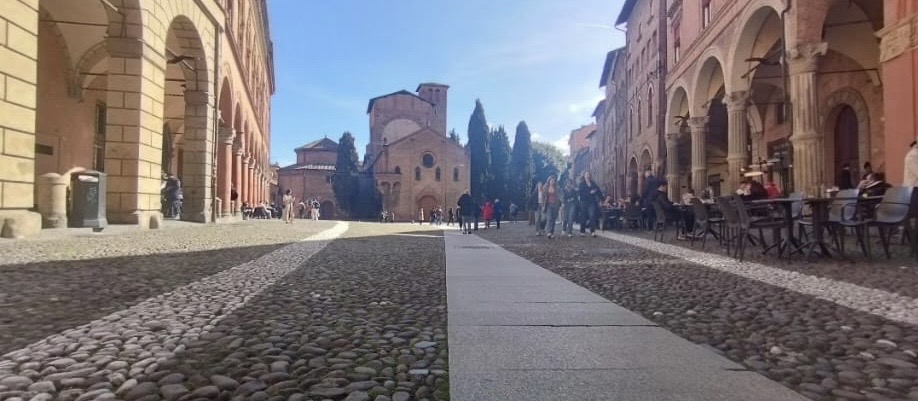
The Basilica of Santo Stefano is part of a complex of seven religious buildings, it is located in Piazza Santo Stefano, but it is known as Sette Chiese. The church dates back to the fifth century, it stands on an ancient pagan temple dedicated to Isis, goddess of fertility, and was intended to imitate the Holy Sepulchre in Jerusalem. Inside there are 12 columns of marble and brick, while in the center there was a shrine that housed the relics of San Petronio. In ancient times it was possible to crawl inside to venerate the remains of the saint, but afterwards, the saint was moved to the Basilica of San Petronio. The Church of Santo Stefano can be visited for free, but it is advisable to check opening hours, as they vary depending on the month you come visit.
I portici
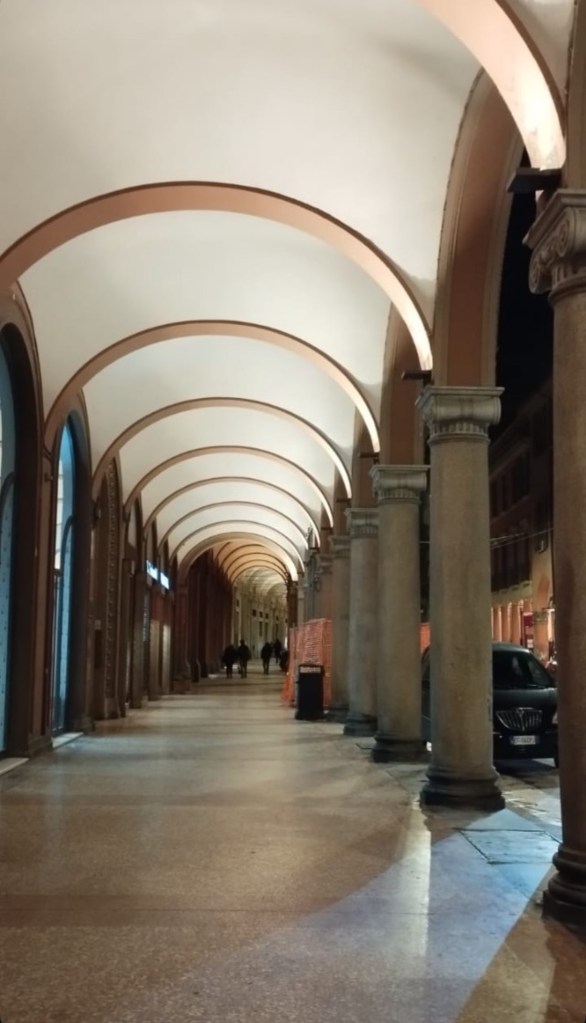
The porticoes considered the UNESCO World Heritage Site are nearly 62 km long, 40 km of which extend through the historic center alone, make the city unique. Since 1100, the porticoes have become a public and private space for socializing and commerce, an open-air gathering place that symbolizes Bolognese hospitality.
After visiting around the most important places in this pretty historic city, you will go back home culturally, artistically, and historically enriched!
 Two Sisters On The Road