Tuscany is an Italian region, situated at the center of Italy. The origin of the name is very ancient and comes from the ethnonym used by the Latins to define the land inhabited by the Etruscans: “Etruria”, later it was transformed into “Tuscia”, then into “Tuscany”.
Tuscany is a very famous region for its landscapes, for its immense history, and incredible culture. Tuscany, especially the city of Florence, is considered the birthplace of the Italian Renaissance and the place where the Italian language was born, for instance considered the cradle of the Italian language.
This part of Italy was the home of very famous and prestigious Italian authors of Italian literature like Dante Alighieri, Petrarca, Boccaccio, and Machiavelli, just to mention some.
Tuscany has an immense cultural and artistic heritage, just to mention the innumerable churches, art galleries, museums, and piazzas. Much of the beauty of these monuments and places are found in the main cities, such as Florence and Siena. In this region there is the largest concentration of Renaissance art and architecture in the world. Famous painters as Donatello, Brunelleschi, Giotto, and Masaccio lived in Tuscany, especially in Florence as well as the two most important artists like Leonardo Da Vinci and Michelangelo, famous for their masterpieces.
If you come to Tuscany and arrive by plane in Pisa, you can’t miss visiting…
Piazza dei Miracoli
In the famous Piazza del Duomo or Piazza dei Miracoli stands the magnificent Torre di Pisa, popularly known as the Leaning Tower, which is the bell tower of the Cathedral of Santa Maria Assunta. Piazza del Duomo is the most important artistic and tourist center of Pisa, listed among the UNESCO World Heritage Sites since 1987.
You can admire the four monuments that form the centre of the city’s religious life, called miracles (so named by Gabriele D’Annunzio in the expression “Prato dei Miracoli”, contained in a famous novel from 1910) for their beauty and originality: the Cathedral, the Baptistery, the Campo Santo and the Bell Tower.
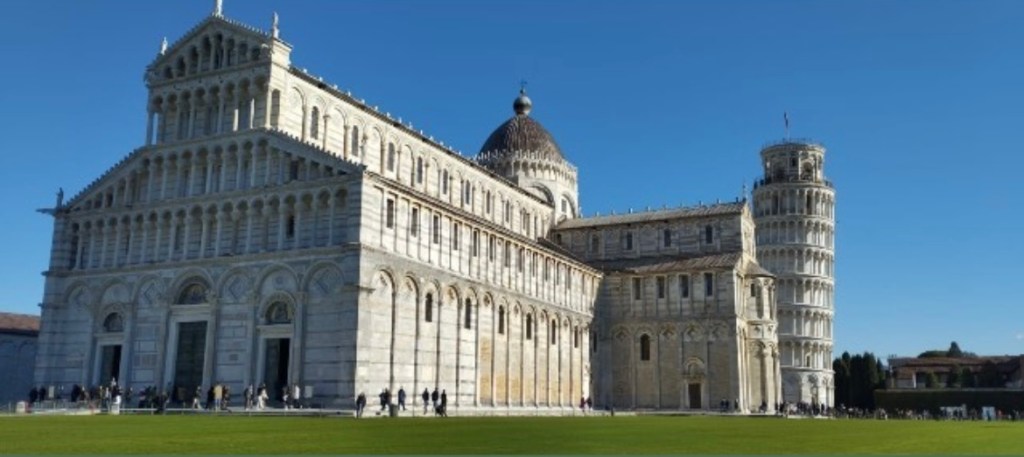
In the center of the square is the Cathedral of Santa Maria Assunta built in Pisan Romanesque style with Byzantine and Arab influences. The white and gray marble facade is rich in detail with black and white marble interior. Worthy of your attention are the apse with the mosaic by Cimabue and the pulpit by Giovanni Pisano, considered the masterpiece of Italian Gothic, and the tomb of Emperor Henry VII of Luxembourg, located behind the main altar, in the apse. The choice of location was aimed at demonstrating the devotion of the Ghibelline Pisans for the Emperor of the Holy Roman Empire.
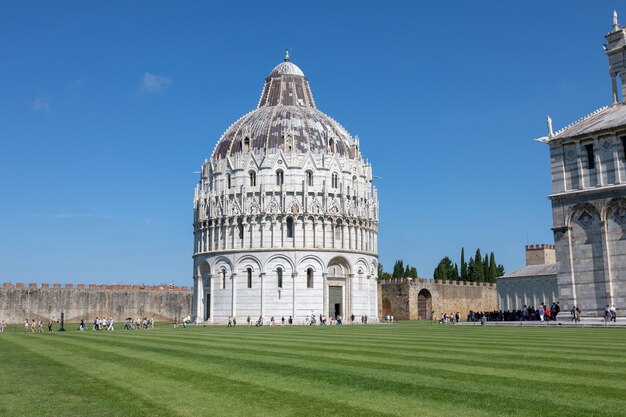
The Baptistery dedicated to Saint John the Baptist is the largest in Italy. Inside you can admire sculptures such as the pulpit, the baptismal font and the bronze sculpture of St. John the Baptist. You will be able to enjoy a singular echo due to the exceptional acoustics which makes this monument a real “musical instrument”, thanks to its height and shape.
The Monumental Cemetery was born as the Cathedral cemetery to house the burials of the most illustrious Pisans.
It has been a sacred place since the Pisans, returning from the Crusade to the Holy Land, transported the soil brought from Jerusalem. From the 16th century, it started to have affixed Roman inscriptions on the walls and other precious testimonies of the city’s history, which make it a sort of Sacred Pantheon.
The Leaning Tower: Torre di Pisa
It is the symbol of the city and icon of Italy in the world. It is 57 meters high, and it was built between the XII and XIV centuries. What makes the tower special is its unique and highly original slope due to a subsidence of the ground on which the base of the bell tower stands.
It is considered the UNESCO World Heritage Site since 1987, and it is the most famous monument due to its particularly characteristic slope. It is certainly the symbol par excellence of the Tuscan city, as well as one of the most iconic monuments in all of Italy. It has been proposed as one of the seven wonders of the modern world.
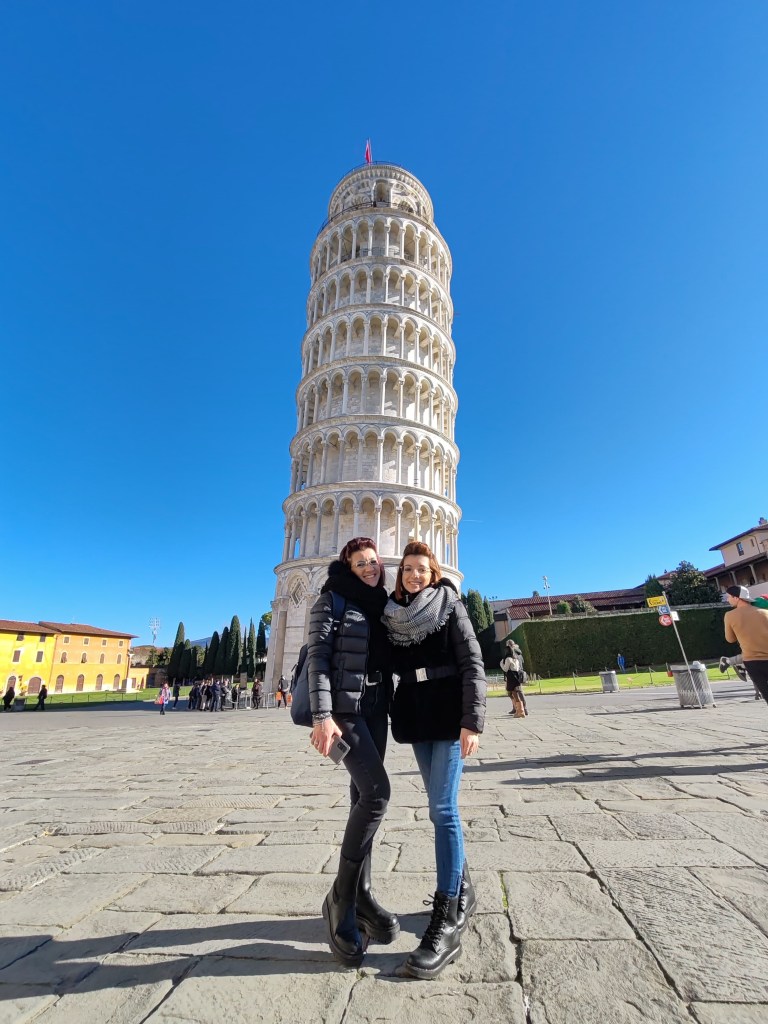
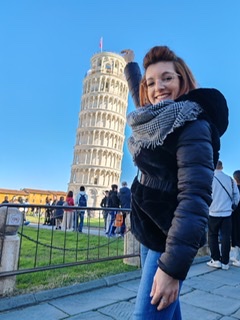
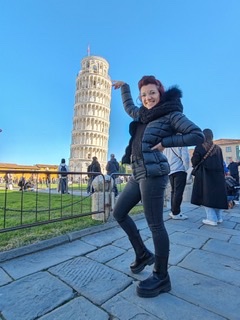
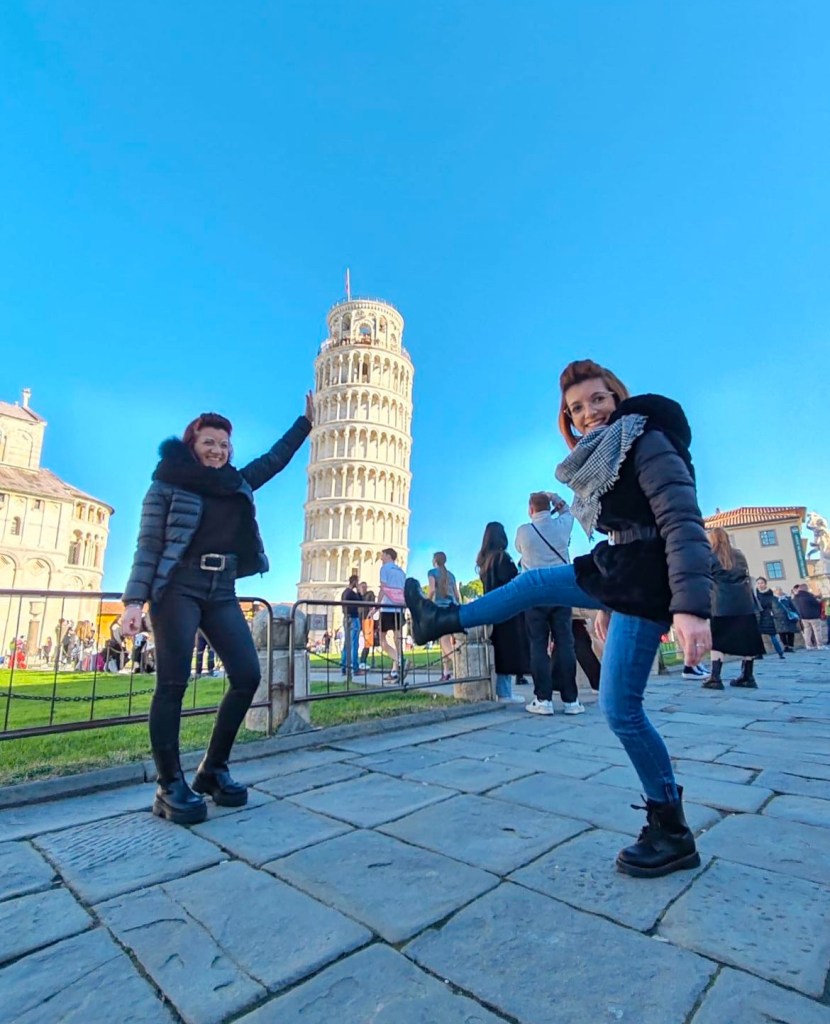
It attracts thousands of tourists every day thanks to its beauty and uniqueness given by its inclination. It is one of the icons of Pisa and of the whole of Italy, and it is undoubtedly one of the most famous and visited monuments by tourists and travelers from all over the world, who never miss the opportunity to take pictures of themselves or have them taken in the most bizarre or curious positions: while holding the statue, pushing the tower, or holding the famous tower in their hand.
The Leaning Tower can be visited all year round. The visit involves climbing 251 steps, some of which are uneven and slippery. The effort in climbing the numerous steps will be amply rewarded, from the top of the Tower you can enjoy a spectacular 360° panorama of the city and its surroundings. The tower is made up of seven floors, seven levels that represent the seven ways of Christ, the seven phases of life, the seven harmonious spheres through which the soul must pass with the help of the seven gifts of the Holy Spirit to reach God.
Take a walk around…. You will be amazed!
 Two Sisters On The Road