Orvieto, a jewel city of 19.307 inhabitants is set in the Umbrian hills. It is a place that enchants visitors with its historic center, rich in history and architectural beauty. Overlooking a spectacular natural setting, dominated by the majestic Cathedral of Santa Maria Assunta, better known as the Cathedral, Orvieto offers a unique experience. Walking through its narrow, cobbled streets, you will discover ancient buildings, medieval churches, charming squares, and breathtaking panoramic views. The charm of Orvieto lies in its ability to transport visitors back in time, just immersing in a romantic and evocative atmosphere. There is also no shortage of opportunities to savor authentic Umbrian cuisine, including delicious traditional dishes and fine local wines. If you are lucky enough to visit Orvieto, the medieval heart of the city is definitely a place not to be missed, where history, art, and natural beauty blend perfectly.
How to reach Orvieto
It’s just an hour and a half away from Assisi by car, so we suggest you to get a taxi, even if it gets a little bit more expensive, but truly convenient. Our motto is trying to save as much time as possible, visiting as much as you can. Arriving at Orvieto by train can get more complicated, it takes around 3 hours and a half. Unfortunately, it’s not a place easily reached from Assisi, because it is in the province of Terni, but surely it’s an unmissable destination if you are are in Umbria.
What to see in Orvieto
Once you arrive at the station, the only way to reach the city is going up with the funicular railway, from there, you can admire the stunning view of the charming medieval town, its gorgeous hills, and the breathtaking panorama, surrounded by nature.

The arrival station of the Orvieto funicular is located in the charming Piazza Cahen, in the center of the city. This convenient and fast means of transportation allows you to easily reach the heart of Orvieto and immediately start exploring the beauties and attractions of the city. In just a few minutes, the funicular takes visitors directly to Orvieto’s main square, where they will also find a tourist information desk. As soon as you find yourself on the main street, there, in front of you stands the majestic and breathtaking Duomo of Orvieto, with its wonderful, fascinating, and timeless elegance.
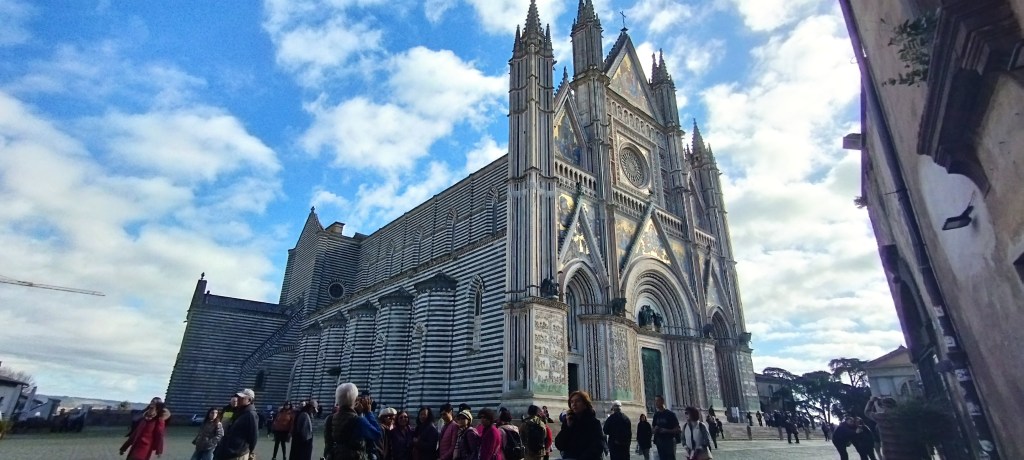
The historic center of Orvieto is a real gem that stands out for its timeless elegance. Overlooking a tuff promontory, Orvieto boasts a thousand-year history that can be felt at every corner, its particular position, as if perched on the hill, makes it singular and truly unique.
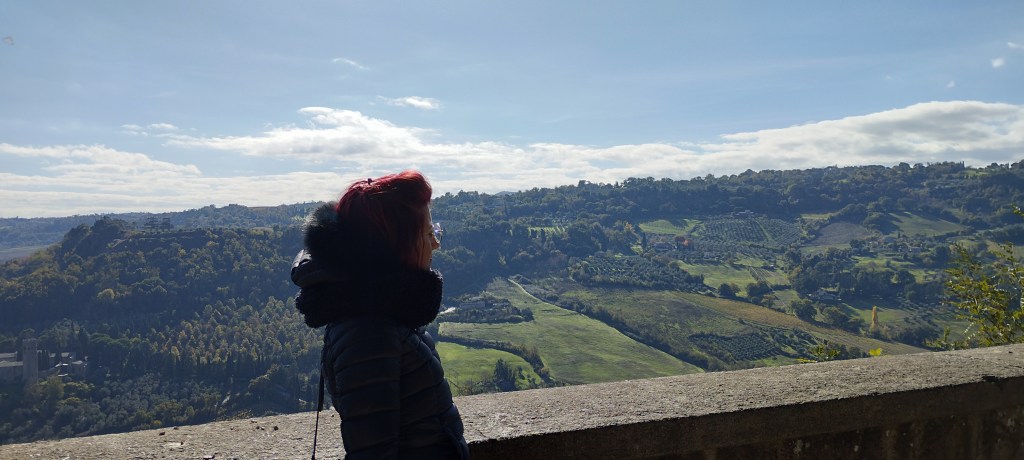
The cobbled streets, charming squares and monuments that stand out, such as the Duomo and the Palace of the Popes, transport the visitor on an exciting journey through history, culture, and art. Orvieto is full of treasures to discover, from the museums to Renaissance churches, from the famous Duomo to St. Patrick’s Well, until arriving at the great discovery of the Orvieto Underground.
Il Duomo di Orvieto
“Orvieto, where Sienese art placed the most beautiful cathedral in Italy, that immense and minute façade, like a sculpted miniature, like a page that cannot be turned, and you look at it endlessly and something melts inside you, in silence like Communion.” This is how Cesare Brandi describes the magnificent Duomo. As soon as we arrived in front of the Duomo, we remained speechless, for its endless beauty, a masterpiece of Gothic architecture, with its façade completely decorated with mosaics.
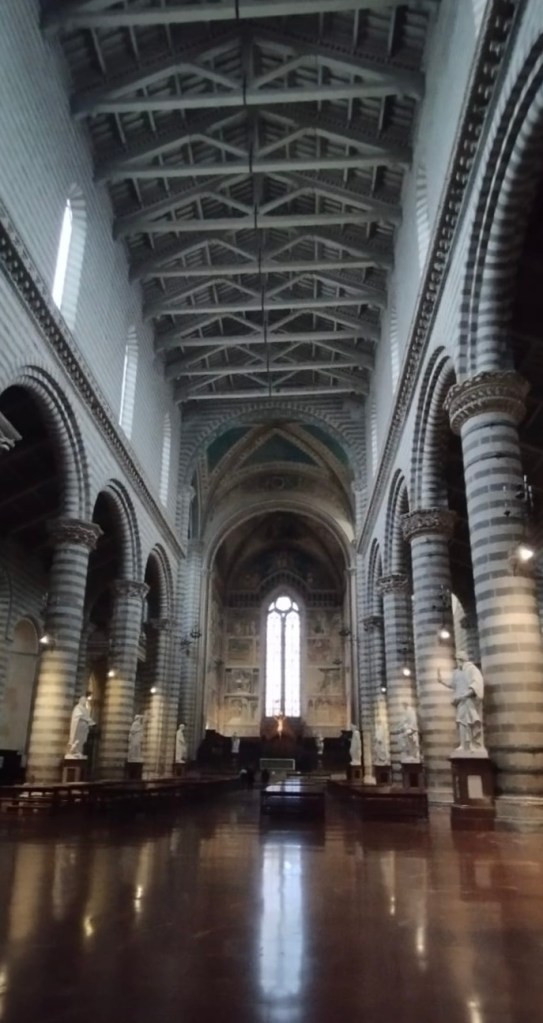
Entering the wonderful Cathedral of Santa Maria Assunta, you are brought back in time, you can walk through the nave and see on your left and right, its huge pillars characterized by the alternation of bands of basalt and travertine of Sienese matrix.
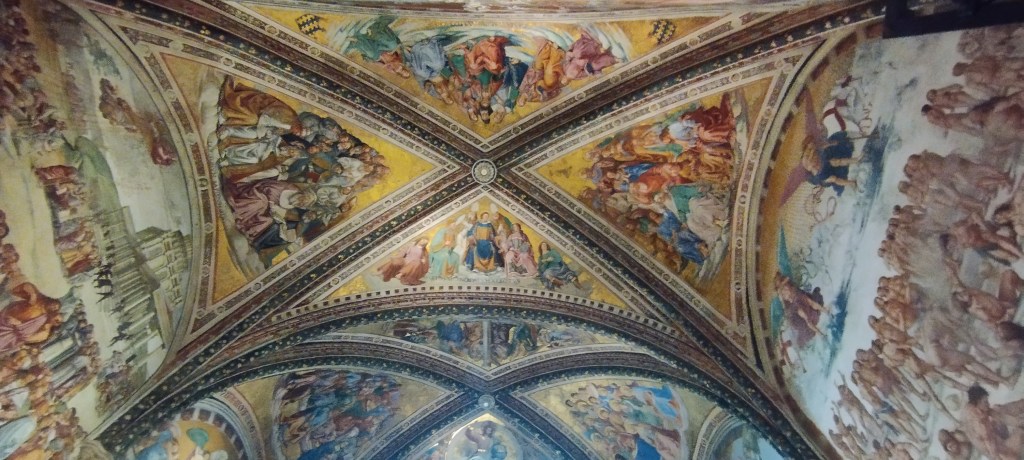
The external walls of the side aisles were originally left empty, then covered with sixteenth-century frescoes. It is worth mentioning one of the cornerstones of Italian Renaissance painting: the Chapel of San Brizio, dedicated to the patron saint bishop of Orvieto, San Brizio, frescoed by Luca Signorelli, one of the most important interpreters of Renaissance painting.
Centro storico
The historic center of Orvieto is really very characteristic: just walking through its streets, it brings you back to discover its almost 3000 years of history and seems to explain why it was so loved by artists, writers and popes. As in all cities, here too we can only recommend getting lost in its streets full of people, shops, taverns, and beauties to photograph.
A mention goes to Piazza della Repubblica with the Collegiate Church of Saints Andrea and Bartolo, characterized by its position close to the large surrounding buildings and the austere tower with a medieval air. Admission is free and in the interior you can admire its simple style.

A mandatory stop if you are visiting Orvieto is, the Torre del Moro, from which you can enjoy a wonderful view of the whole town and the surrounding areas. The Tower, also called the Civic Tower, was built in 1200 in a strategic position for several reasons. First of all, it is located at the crossroads of some of the most important streets of the city, namely Corso Cavour, Via del Duomo, and Via del Costituente. Second of all, it is important for its height, 47 meters, which puts it in a strategic position to observe all the surrounding areas. Finally, the Tower also serves as a clock, in fact its famous bells have marked the lives of citizens for centuries.

Once you get to the top of the tower, you will be enraptured by the incredible view. Given the position of Orvieto, resting on a tuff cliff, the effect of height from the top of the Torre del Moro is amplified. From here one’s gaze sweeps over the city, you can see the countryside surrounding the cliff that makes everything even more suggestive. From up there the view of the Duomo is unique: it stands out in all its splendor among the houses and buildings that surround it.
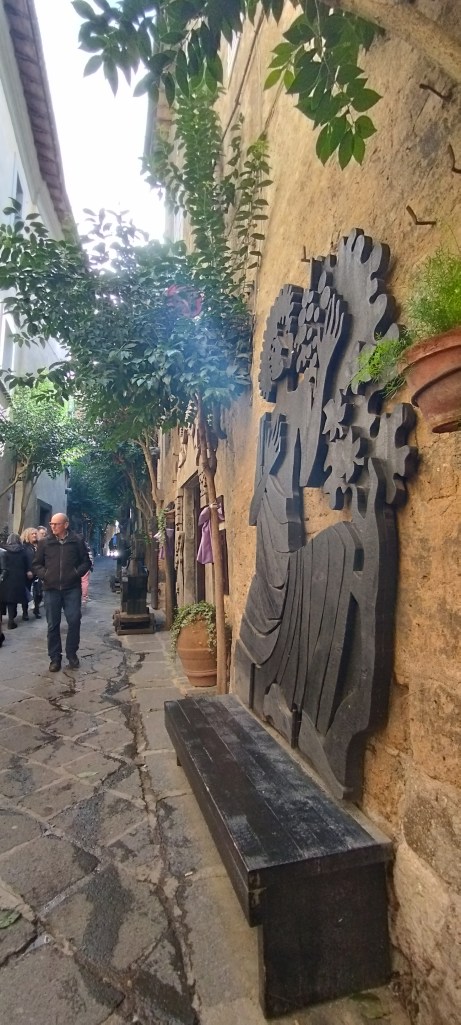
Continuing on Corso Cavour, don’t miss Via Gualverio Michelangeli, famous for its shop of the same name that exhibits very beautiful wooden works and for the lush trees that really make it the perfect alley to immortalize.
Orvieto sotterranea
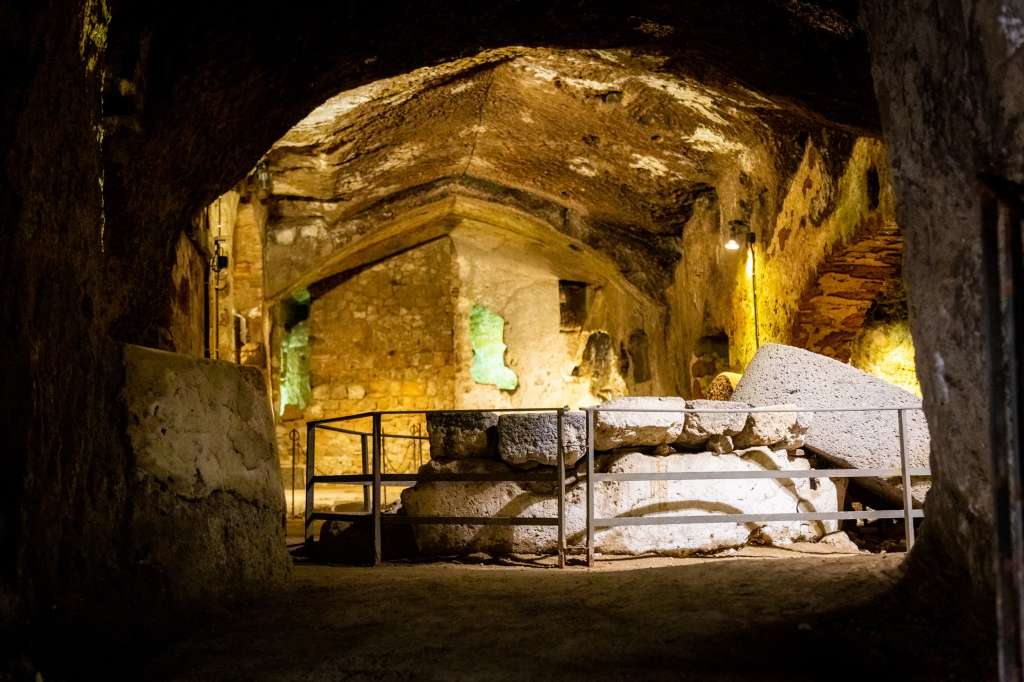
Right next to the entrance of the Duomo you can access one of the most curious and at the same time interesting corners to see in Orvieto: its underground part! Just think that this was discovered almost by chance after a landslide in very recent times. Many legends have been told about Orvieto Sotterranea, but no one had ever found evidence of its existence. The visit is guided and lasts about 45 minutes. You can buy a ticket, at a cost of €7, right next to the Duomo, and it is surely so interesting to go back in time by listening to a guide explaining all its history, and it is so fascinating to see the ruins of the underground city. Descending into the heart of Orvieto, thanks to the guidance of an expert is the perfect way to retrace the footsteps of the people of Orvieto in Etruscan, Medieval, and Renaissance times.
Il Pozzo di San Patrizio
The Pozzo di San Patrizio, one of the most evocative and mysterious things in the city, is a place that absolutely must not be missed on your tour! This well was built by Pope Clement VII who, after the sack of Rome, had fled to Orvieto. The project was commissioned to Giuliano da Sangallo the Younger in 1527 and was a real work of engineering.
The well is 54 meters deep and has been completely dug into the tuff, a rock that is very hard to dig. It has a diameter of 13 meters. The staircase is a true masterpiece: there is a ramp to go up and one to go down, each connected to two different doors. The stairs are connected at the bottom of the shaft by a walkway. There are 248 steps to descend and a total of 72 windows overlook them.
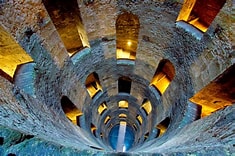
The Pope wanted Orvieto to always be supplied with water in case it was under siege, so that it could remain self-sufficient for a long time. At the bottom of the well you will see the water that comes from a natural spring.
Initially it was called Pozzo della Rocca and only in the 1800s did it get its current name, given to it by the friars of the Convent of the Servites who were inspired by the legend of Saint Patrick. Legend says that the Saint would go to pray in a cavity, at the bottom of which there was the entrance to Purgatory.
After this not so brief, but intense virtual itinerary, immerse yourself in the history and in the beauty of Orvieto, by organizing a trip!
 Two Sisters On The Road