If you have never been to Umbria, the time has arrived to visit it! It is a region located in the central part of Italy exactly in the heart of the peninsula, from which you can’t see the sea. Historically, the land was inhabited by the Umbrians, from which it takes its name. The region offers a wide variety of geomorphological and landscape features through the succession of valleys, mountain ranges, plateaus and plains, which constitute its dominant geographical characteristics. It is a region best known for its landscapes and unspoiled nature. Thanks to its location, in fact, it has a very varied territory with mountains, hills and lakes that make it one of the most popular destinations for travelers.The territory is mainly hilly and mountainous, and you can contemplate breathtaking panoramas.
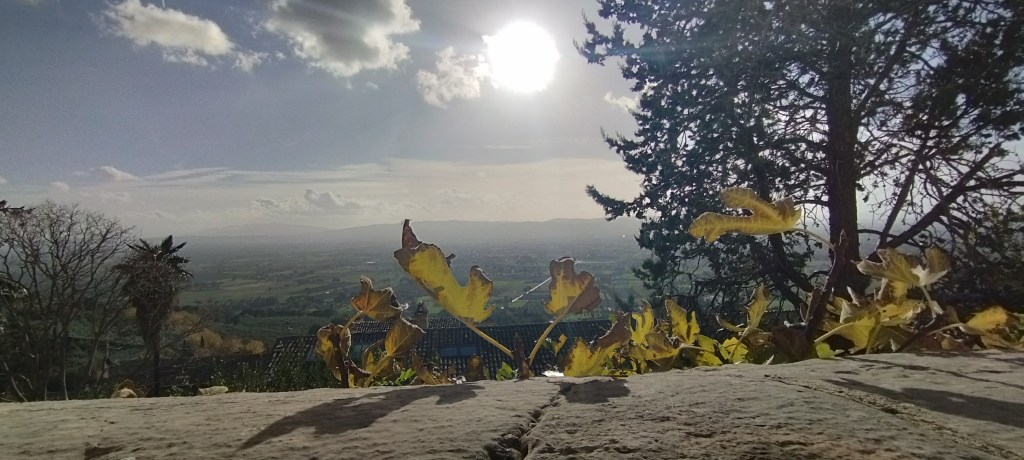
In addition to the naturalistic aspect, the region is rich in traditions, festivals, and cuisine: typical products, good wine, and unique stories reflect the fantastic Umbrian villages of Etruscan and medieval origin. It’s a magical region to visit for its countless history, architecture, and art and once you visit the region, it captivates you, leaving each traveler astonished by its authentic charm. Most of these villages that Italians call “borghi”, are very similar one to another and, the special feature is precisely the stone with which the ancient villages were built on the hills, in Umbria. Away from the hustle and bustle, enjoy these small and beautiful masterpieces: squares, alleys, fortresses, castles, churches, basiliche, towers, bell towers, temples, and wells.
The main “borghi” to visit on a three day trip:
–Assisi
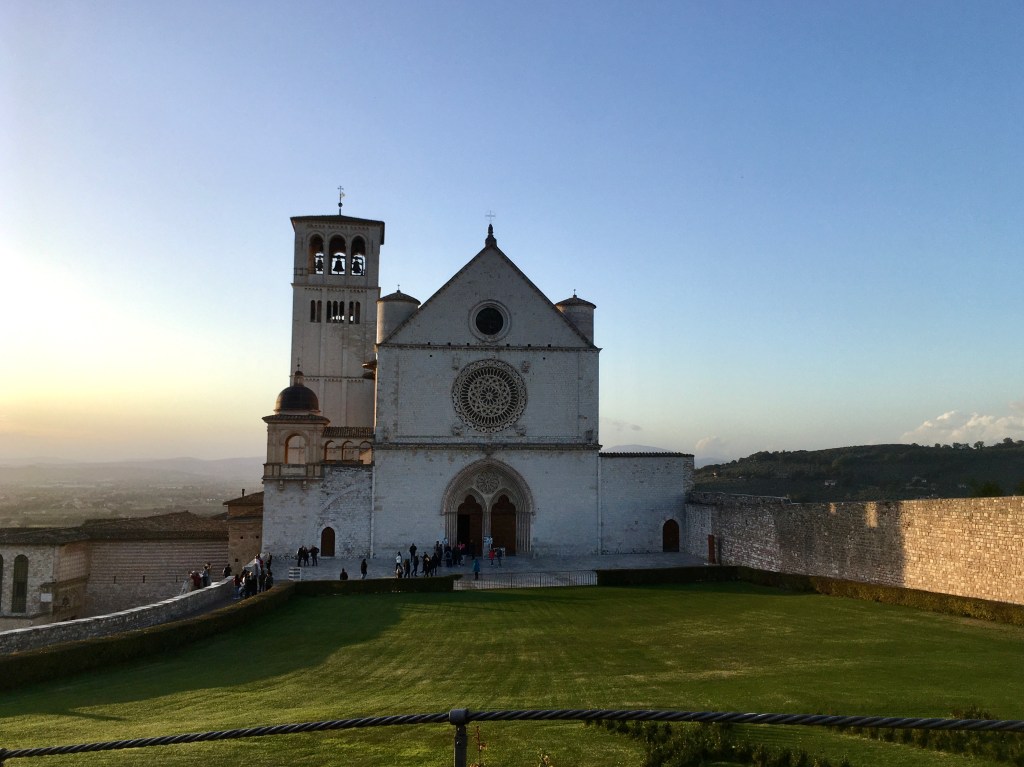
There isn’t a more fascinating town than Assisi. It’s a small town of about 30,000 inhabitants, it’s known to have been the birthplace of St. Francis, patron saint of Italy. Assisi, the center of mystery and spirituality, is the destination of thousands of pilgrims every year from all over the world. Assisi is located on the slopes of Mount Subasio, at 424 meters above sea level, from where you can observe an amazing hilly and mountainous panorama, with small streets, and with a historic center built in stones and bricks. Walking around the town it seems you went back to medieval times, providing the traveler’s eyes with a peaceful and quiet atmosphere. The oldest part of Assisi is protected by a defensive system consisting of eight fortified access gates and a long wall, still in excellent condition, including two castles: the Rocca Maggiore, rebuilt by Cardinal Albornotz in 1367 and the Rocca Minore. Last but not least, in Assisi you can visit two of the most important Basiliche: Basilica di San Francesco and Basilica di Santa Chiara, both listed in the UNESCO World Heritage Site.
–Spello
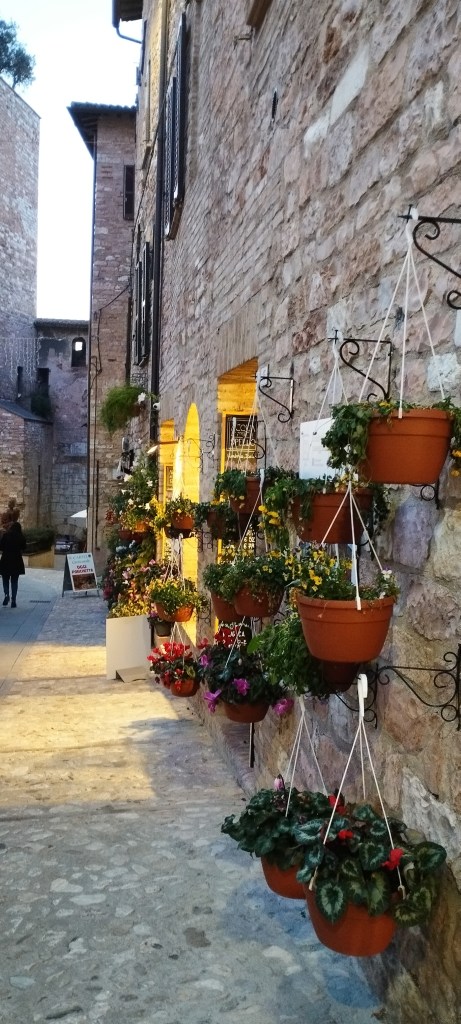
Spello is one of the most enchanting and strategic Umbrian villages to visit at least once in a lifetime. It’s located a few kilometers from cities such as Assisi, Perugia and Spoleto. Every traveller is enchanted by the beauty of this small village surrounded by nature. Its characteristic lies in the large amount of flowers that can be admired all year round, but especially during Spring and Summer, at the entrances of each home. This small town is known as “la città d’arte e dei fiori”, and this is what makes it unique. Among its alleys you can see the influence of the Romans and Lombards. The place, is also influenced by an intense artistic activity and the city is enriched with Renaissance masterpieces by very famous artists as Pinturicchio, Perugino and Nicolò di Liberatore known as the Alunno.
Here you can find the best-preserved Roman fortified walls in Italy with three entrance gates (Consular, Venus and Urbica) and the Church of Santa Maria Maggiore. It overlooks the wonderful Umbrian plain and is surrounded by centuries-old olive groves from whose plants a fine and high quality oil is obtained.
–Orvieto
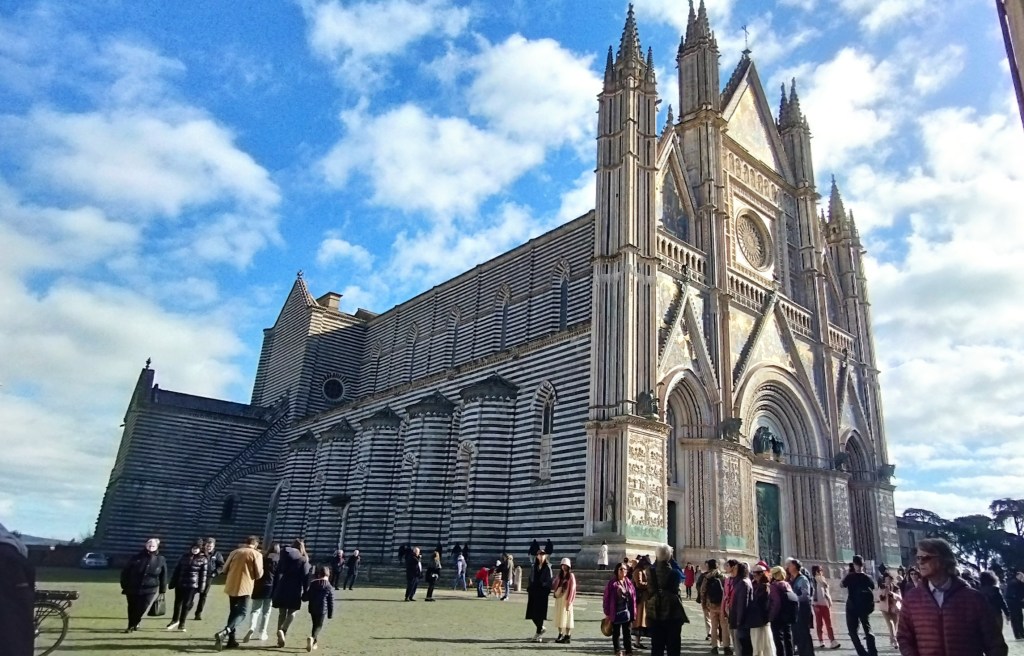
Orvieto, one of the oldest cities in Italy, owes its origins to the Etruscan civilization: the first settlements date back to the ninth century BC and were located inside the caves carved into the massif on which the Umbrian town currently stands. Although Orvieto’s fame is deeply intertwined with that of its magnificent cathedral, the city offers numerous ideas and historical-artistic itineraries, precisely by virtue of its ancient origins. Perched on a cliff, moreover Orvieto offers truly splendid panoramic views but the outstanding Cathedral is a very sumptuous and adorned Cathedral, it’s also a colorful example of Romanesque-Gothic architecture, rich in works of art, and when you admire it, it gives you an extraordinary sense of astonishment. Once there, you need to immerse yourself in the timeless atmosphere of the Underground City which is entirely carved out of the cavities dug by the inhabitants over the centuries, full of wells and caves; you cannot leave the city without visiting the famous St. Patrick’s Well, next to the municipal gardens that are located inside the Albornoz Fortress.
The best time to visit Umbria
Umbria, being a region of central Italy far from the sea, finds itself having a fairly varied climate due to the different altitudes. Summer is characterized by drought while winter is very rainy with cold temperatures. We visited the Umbrian land in the middle of November, the climate wasn’t very harsh, we were lucky enough to find three beautiful sunny days, that enabled us to travel around and visit the principal touristic attractions, despite the cold temperature. Early in the morning and late at night the temperature can touch zero degrees Celsius, but during the day, the sun warms you up to walk around the different towns. Even if we were lucky enough to find beautiful weather, we suggest you to go during Spring or Summer, especially because you can see more tourists around and appreciate Spello more, with its countless flowers, its scents, and its various colors.
 Two Sisters On The Road